
The rupee depreciated by 37 paise to close at 79.62 against the US dollar on Thursday despite sustained foreign capital inflows and a positive trend in equities. At the interbank foreign exchange market, the local currency opened at 79.22 and saw an intra-day high of 79.22 and a low of 79.94 against the American currency. It finally ended at 79.62, down 37 paise over its previous close of 79.25.

Rajapaksa's decision was to ensure public security and maintain essential services so as to ensure a smooth functioning of the country, the presidential media division said.

The rupee depreciated 44 paise and slipped below the 81-mark against the US dollar for the first time in early trade on Friday, weighed down by the strong american currency and risk-off sentiment among investors. Forex traders said escalation of geopolitical risk in Ukraine and rate hikes by the US Fed and Bank of England in a bid to contain inflation sapped risk appetite. Further, the strength of the American currency in the overseas market, a negative trend in domestic equities, and risk-off moods amid escalation of geopolitical risk in Ukraine weighed on the local unit.

Indian rupee, which earlier this week touched an all-time low, is likely to remain under pressure and may test new levels as a fallout of the US Federal Reserve indicating more interest rate hikes, experts said. The aggressive rate hikes will dampen demand and increase the possibility of a recession in the US. This could accelerate the pace of capital outflows, weaken the rupee and raise the threat of imported inflation.

It has registered 2,000-plus money laundering cases and about 12,000 forex violation ones in the 14 years since it was established. Yet, its probes have resulted in no more than 13 convictions from nine cases of money laundering since 2005.

The Indian rupee is expected to trade between 80 and 84 against dollar in the first three months of 2023 with support from overseas inflows though worsening current account deficit (CAD) and reduced interest rate differential between the US and India pose challenges. According to a Business Standard Poll of 10 participants, most said the rupee could gain strength in January due to foreign inflows, and the Reserve Bank of India (RBI) is not expected to allow the currency to depreciate ahead of the Union Budget scheduled on February 1. The rupee depreciated 10.15 per cent in 2022, its worst performance since 2013 as the war in Europe and the interest rate increase by the US Federal Reserve prompted investors to flee emerging markets.

High interest costs and a weak rupee may raise overall debt, even as refinancing may not be an issue.

Economist Jayati Ghosh noted that the word 'freebies' indicates the class position of those who use it.

'The prospects for both India and the global economy is that we are headed towards a very difficult time.' 'I see very uncertain at least 8-10 months for both India and the rest of the world.'

The country's foreign exchange reserves jumped by a massive $7.779 billion to touch a lifetime high of $568.494 billion in the week ended November 6, RBI data showed on Friday. In the previous week ended October 30, the reserves had increased by $183 million to $560.715 billion. In the reporting week, the jump in reserves was mainly on account of an increase in foreign current assets (FCAs), a major component of the overall reserves.

The rupee weakened by 14 paise to close at a new lifetime low of 79.59 against the US dollar on Tuesday as a strong greenback overseas and persistent foreign fund outflows continued to weigh on investor sentiment. This comes a day after the RBI announced measures for international trade settlement in rupees. At the interbank forex market, the local unit opened weak at 79.55 against the greenback and witnessed an intra-day high of 79.53 and a low of 79.66.

Federal Bureau of Investigation agents on Tuesday arrested 48 foreign exchange brokers in connection with a probe into securities and currency fraud, according to a CNN/Money report.

For the banking system a new cycle starts in FY2024. It's fraught with fresh challenges on asset quality and profitability, warns Tamal Bandyopadhyay.

The rupee fell by 41 paise to close at a fresh lifetime low of 79.36 (provisional) against the US dollar on Tuesday amid a strong greenback overseas and unrelenting foreign fund outflows. At the interbank forex market, the local unit opened at 79.04 against the greenback and witnessed an intra-day high of 79.02 and a low of 79.38. It finally settled at 79.36 (provisional), down 41 paise over its previous close.

Bank of America (BofA) Securities expects India to be the third-largest economy in the world by 2031. The economic rise could become a reality by 2028, but the Covid pandemic delayed the pace, BofA Securities economists Indranil Sen Gupta and Aastha Gudwani wrote in a report.

'Valuations are very attractive, and most companies are cash-rich with strong dividend yields.'

Lower crude oil prices and a rally in domestic equities restricted the losses to some extent, forex dealers said. At the interbank foreign exchange market, the domestic currency opened weak at 79.50 per dollar.

Tata Steel was the top gainer in the Sensex pack, rallying nearly 4 per cent, followed by Bajaj Finance, M&M, Bajaj Finserv and Reliance Industries. NSE Nifty advanced 33.95 points to a fresh high of 16,563.05.
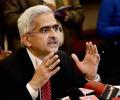
Reserve Bank Governor Shaktikanta Das on Monday said despite the latest headwinds arising from the Jackson Hole summit leading to extreme volatility, our banking system and financial markets are strong enough to withstand such pressures. Taking the markets by surprise, US Fed chair Jerome Powell had told the annual Jackson Hole summit of central bankers and economists last week that he would have to keep raising federal fund rates to tame inflation, which remains the biggest challenge to the world's largest economy. He also warned of the pains that such monetary policy actions would create on growth and jobs.

Petrol doped with 20 per cent ethanol was rolled out on Monday at select petrol pumps in 11 states and union territories as part of a programme to increase use of biofuels to cut emissions as well as dependence on foreign exchange-draining imports. At present, 10 per cent ethanol is blended in petrol (10 per cent ethanol, 90 per cent petrol) and the government is looking to double this quantity by 2025. Prime Minister Narendra Modi launched the higher 20 per cent ethanol blended petrol two months ahead of the planned rollout in April, at the India Energy Week (IEW) 2023 in Bengaluru.

Dollar's weakness against some other currencies overseas supported the rupee.

Not only is gold a hedge against currency depreciation, rising crude prices and uncertainty, it is up 7 per cent (in dollar terms) in the past 12 months, says Devangshu Datta.

The Reserve Bank of India's (RBI's) outstanding net forward purchases of US dollars fell by more than 50 per cent from the last quarter of FY22 to $30.86 billion in the June quarter (Q1). The net forwards position was at $65.79 billion at the end of the last fiscal year. The purchases fell by $18.33 billion in June as the central bank intervened in both the forwards and the spot market in order to protect the rupee from excessive depreciation in the face of a widening trade deficit.
.jpg)
The Indian currency had hit record low of 57.32 against a dollar in June last year.
Foreign currency assets, a key component rose $1.6 bn to $304.9 bn.
Online foreign exchange facilities will help customers manage their cash better.
The rupee extended its losses and slumped 60 paise to close at a record low of 77.50 (provisional) against the US dollar on Monday, pressured by the strength of the American currency overseas and unabated foreign fund outflows. Forex traders said risk appetite has weakened amid mounting concerns about inflation that may trigger more aggressive rate hikes by global central banks. At the interbank foreign exchange market, the rupee opened lower at 77.17 against the greenback, and finally settled for the day at 77.50, down 60 paise over its previous close.

It plans to use it as collateral, along with forex reserves, to print currency.

The two central premier investigative agencies - Central Bureau of Investigation and Enforcement Directorate - have asked their officials to focus more on digital evidence, e-forums and social media to crack down on offenders. These are a crucial part of prosecution amid the second wave of the pandemic. The Income Tax Department is going full throttle on data analytics to issue notices in time-bound cases. Further, sleuths have been given electronic devices including laptops with secure connections, which keep data encrypted and inaccessible.

The Reserve Bank on Monday asked banks to put in place additional arrangements for export and import transactions in Indian rupees in view of increasing interest of the global trading community in the domestic currency. Before putting in place this mechanism, banks will require prior approval from the Foreign Exchange Department of the Reserve Bank of India (RBI), the central bank said in a circular. "In order to promote growth of global trade with emphasis on exports from India and to support the increasing interest of global trading community in INR, it has been decided to put in place an additional arrangement for invoicing, payment, and settlement of exports / imports in INR," it said.

The rising price of the precious metal has helped the central bank increase overall forex reserves despite currency reserves not rising, and sometimes even falling.

This follows an investigation into alleged violations of foreign exchange rules involving foreign direct investment of Rs 85 crore and Rs 140 crore by JP Morgan India and Amrapali Group firms.

The Reserve Bank's rate-setting panel will start its 3-day deliberations on Wednesday amid expectations of yet another rate hike of 50 basis points to check high inflation, in line with similar actions taken by other major central banks, including the US Fed. Based on the recommendations of the Monetary Policy Committee (MPC), the RBI had effected 50 basis points increase in repo rate each in June and August after raising the short-term lending rate by 40 basis points in an off-cycle decision in May. The MPC, headed by RBI Governor Shaktikanta Das, is scheduled to meet during September 28-30.
The interbank foreign exchange, call money as well as major essential commodities markets like sugar, edible oils, cotton, metals and bullion will remain officially closed on Wednesday on the occasion of Gudi Padwa.

Global rating agency S&P on Tuesday said even though the US and the Euro zone are headed to recession, India is unlikely to face the impact given the "not so coupled" nature of its economy with the global economy. "Indian economy is a lot decoupled from the global economy than we normally think of, given its large domestic demand, even though you (India) are a net importer of energy. "But you have enough forex reserves on one hand and your companies have managed to maintain healthy balance sheets," Paul F Gruenwald, S&P global chief economist and managing director, told reporters in Mumbai.

Assume that the rupee will trend lower over the next 10 years as India increases overseas sovereign exposures, and your long-term asset allocation should be geared to deal with this trend, suggests Devangshu Datta

All markets will remain closed on Monday, April 14, on account of Dr Baba Saheb Ambedkar Jayanti.

State Bank of India (SBI) on Tuesday announced the launch of its first "state-of-the-art" dedicated branch for start-ups in the country here, to facilitate and support them. The branch launched by SBI chairman Dinesh Khara is located in Koramangala, which alongside neighbouring HSR Layout and Indiranagar are the biggest start-up hubs in the city. "...overall we are in a position to provide end-to-end services to start-ups, with that in mind this particular start-up branch is the first start-up branch we are starting, from the capital city of start-ups- Bengaluru.

The recent market crash in China has triggered sympathetic drops.

The Congress released a booklet 'Nau saal, Nau sawaal', asking nine questions from Modi. The BJP rejected the Congress' criticism as a 'bundle of lies and mountain of deception' and said the questions are born out of 'pathological hatred' of the PM.
 © 2026 Rediff.com - Advertise with us - Disclaimer - Privacy Policy - Sitemap - Feedback - About us - Terms of use - Grievances